
Mastering Change Management: Why Clarity and Alignment Are Non-Negotiable in Digital Transformation
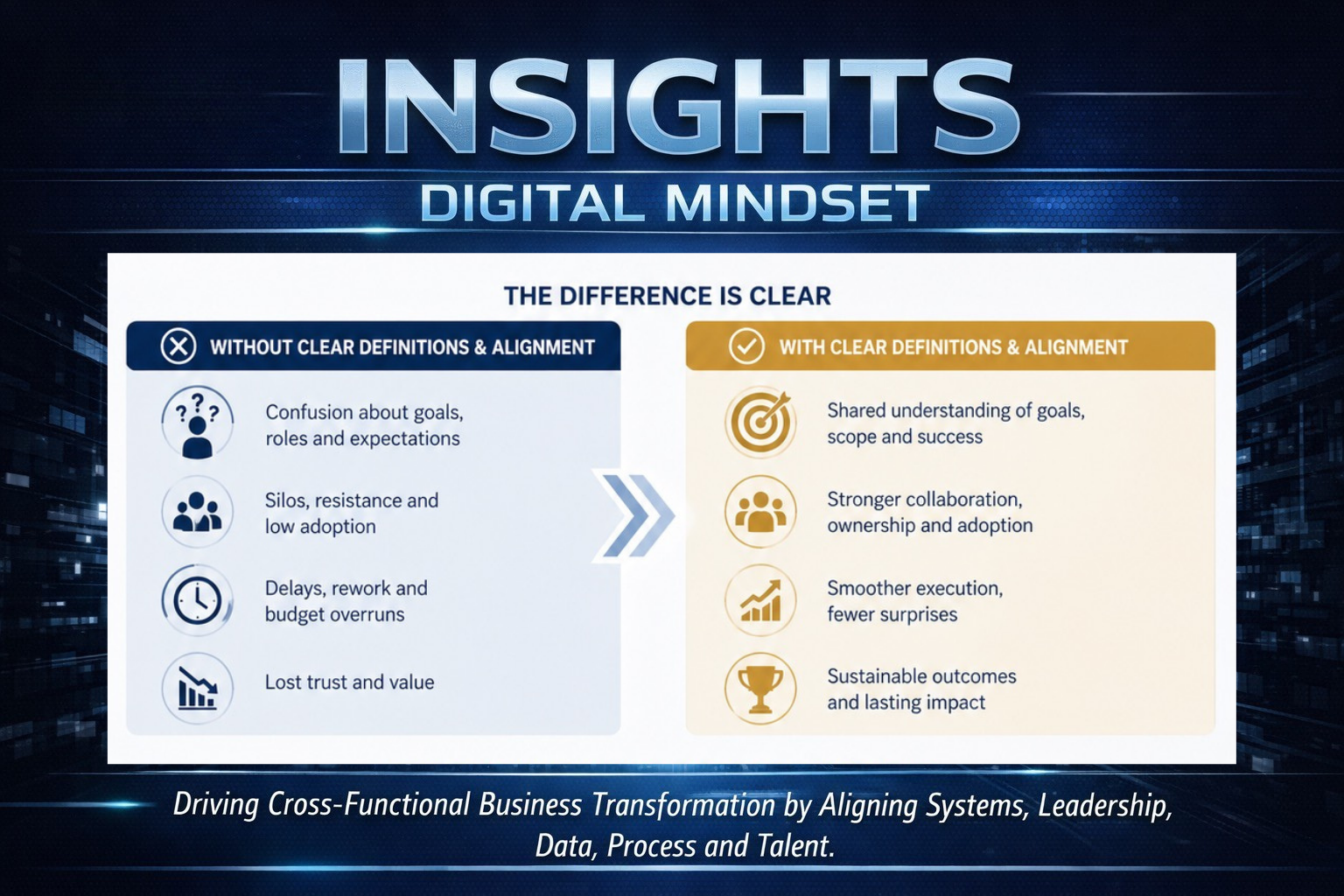
Digital transformation is more than a technological upgrade; it is a fundamental reinvention of how an organization operates. However, the statistics are striking: only about one-third of major change initiatives succeed, while approximately 60–70% fail. Many programs start with good intentions but lack clear definitions, measurable objectives, or organizational alignment. As McKinsey points out, fewer than one in five transformation initiatives include outcome-based objectives and metrics.
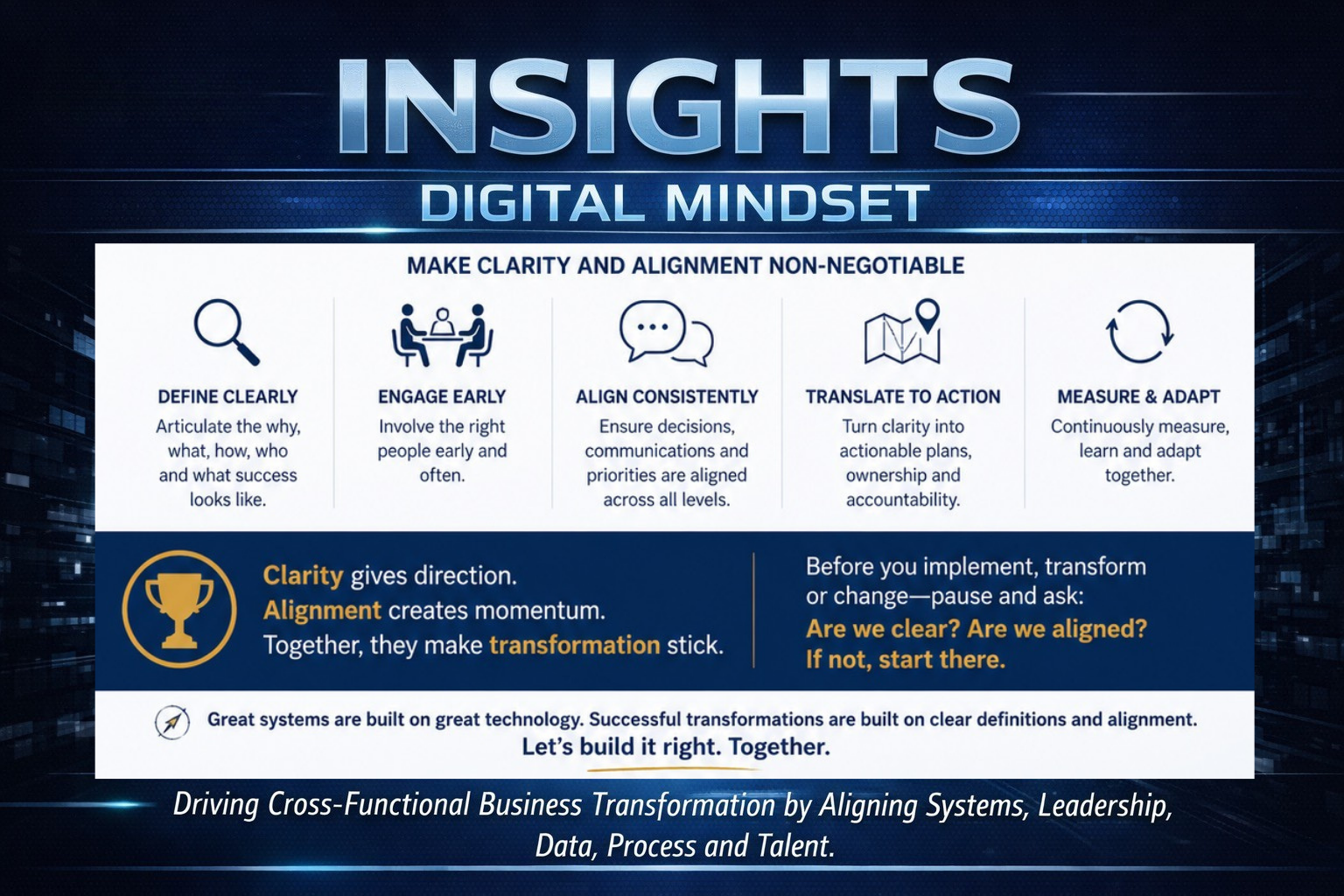
For leaders navigating this landscape, the lesson is simple yet demanding:define the destination and get everyone rowing in the same direction before setting sail.Here’s how to make clarity and alignment your key strategic differentiators.
1. Anchor the vision in business value and measurable outcomes
Successful transformations begin with a clearly articulated vision based on business objectives, not technology. Eubrics' human resources analysis for 2025 warns that many digital initiatives fail because organizations jump to tools or platforms without defining the outcomes they expect, leading to loss of momentum and poor returns. To avoid this trap:
- Define the "North Star":Identify the specific strategic objectives that support your transformation. Harvard Business School advises that a robust change plan should detail strategic objectives, key performance indicators, stakeholder roles, and the project scope. This clarity ensures that everyone understands why the change matters and how success will be measured.
- Communicate the vision relentlessly:A compelling vision must be communicated through multiple channels (town hall meetings, digital platforms, and training programs) to build alignment. When employees understand how the change contributes to future growth, resistance decreases and engagement increases.
2. Involve stakeholders from the beginning and build a governance structure
Alignment is a team sport. Ellucian points out that digital initiatives can be perceived as IT mandates unless business leaders are involved from the start. Early stakeholder engagement creates a sense of shared ownership and avoids the blame game that often follows implementation challenges. Strategic actions include:
- Stakeholder map:Identify all affected groups (from frontline staff to executives) and involve them in the planning. EuBrics emphasizes that early engagement of a broad spectrum of actors transforms them from passive recipients into champions of change.
- Governance and accountability:The change management framework of JP Morgan emphasizes the importance of establishing clear roles, processes, and monitoring mechanisms to guide change. KPMG recommends first aligning management on objectives and then defining roles and responsibilities within a governance structure. A change management office or steering committee can formalize this oversight.
3. Assess readiness and address change fatigue
Jumping straight to implementation without understanding organizational readiness is risky. Plante Moran advises leaders to conduct pre-change readiness assessments to measure an organization's capacity and willingness to change. If resistance is high, leaders should adjust the pace, perhaps launching pilot projects or focusing on skill enhancement. Other considerations:
- Meet people where they are:Executives may be immersed in the change plan, but frontline workers are hearing about it for the first time as anxiety rises. Plante Moran suggests identifying early adopters and internal champions who can communicate and contextualize the change throughout the organization.
- Recognize change fatigue:Frequent changes can exhaust teams. Leaders should monitor burnout, rotate high-potential staff into new roles to provide growth opportunities, and consider incentives to maintain motivation.
4. Design specific learning and communication strategies
Learning and communication are the glue that holds change efforts together. Impact Advisors warns that complex implementations (such as ERP or EHR systems) require a well-defined process and clear definitions of the desired change to avoid underestimating the effort. Prosci points out that using a standardized framework with predefined terms eliminates ambiguity and ensures that everyone speaks the same language. Best practices include:
- Developing your workforce's competencies:EuBrics urges companies to invest in specific learning programs to close skill gaps, using adaptive learning platforms and microlearning modules. AIHR emphasizes the role of HR in providing personalized training and support, aligning new tools and processes with the company's values.
- Maintaining two-way communication:Transparent and multidirectional communication reduces uncertainty. EuBrics recommends using forums, surveys, and collaborative platforms to gather feedback and detect issues early. HR plays a vital role in communicating the reasons and benefits of changes through emails, FAQ documents, and plenary meetings.
5. Define roles and enforce accountability
Change programs often stall when responsibilities are unclear. J.P. Morgan highlights the importance of establishing governance with clear responsibilities and follow-up, while KPMG recommends defining success criteria and creating a support structure with clear roles. Bridgewey reinforces that initiatives should connect directly with the business strategy, with defined scopes, phases, and deliverables. Practical steps:
- Clarity of roles:Specify who is responsible for each workflow and how decisions will be made. Plante Moran notes that leaders must be prepared to replace individuals who persistently resist change or do not improve their skills.
- Monitor and adapt:AIHR recommends tracking metrics such as adoption rates, employee engagement, and feedback, using dashboards to quickly adjust plans. EuBrics also emphasizes the need for continuous measurement and adaptation.
6. Celebrate achievements and integrate change into the culture
Maintaining momentum requires recognition and cultural integration. McKinsey observes that leaders can achieve a 70–80% success rate when they define clear outcomes and combine them with a persuasive narrative. EuBrics suggests celebrating small victories to combat transformation fatigue and integrate change into the organizational mindset so that innovation and adaptability become constant habits.
Looking to the future: a mindset prepared for tomorrow
Digital transformation will only accelerate as artificial intelligence, automation, and data analytics reshape industries. The average employee now experiences multiple change programs each year, making clarity and alignment even more crucial.
When definitions are clear, roles are aligned, and communication is constant, change ceases to be a disruptive force and becomes a catalyst for growth.
Leaders must adopt a future-ready mindset: experiment, learn, and iterate, while maintaining a laser focus on results and people..